Chickery's Travels

Chickery's Travels logo. A blue-green Earth globe with continents surrounded by dots with an arrow denoting movement or travel and "Chickery's Travels" as part of the dotted circle. Next to this is a photo of their blue and white Arctic Fox 5th Wheel with the awning out.
  • Home
  • Campground Reviews
    • The Best U.S. National Park Campgrounds
    • 28 Must-See State Park Campgrounds You Can’t Miss
    • Alternatives To National Park Campgrounds: Discover Hidden Gems Just Outside the Park Boundaries
    • Best Luxury RV Resorts For All RV Types
    • Best Waterfront Campgrounds For Every Budget
    • Alabama
      • Gunter Hill Campground (Montgomery, Alabama)
    • Arizona
      • Best Campgrounds in Arizona
      • Aspen Campground (Payson, Arizona)
      • LazyDays KOA (Tucson, Arizona)
      • Lost Dutchman State Park (Phoenix, AZ)
    • Arkansas
      • Catherine’s Landing (Hot Springs, Arkansas)
      • Downtown Riverside RV Park (Little Rock, Arkansas)
    • California
      • Best Campgrounds in California
      • Crescent City Redwoods KOA (Crescent City, California)
      • Sea Breeze RV Park (Seal Beach Naval Weapons Station)
    • Delaware
      • Cape Henlopen State Park (Lewes, Delaware)
    • Florida
      • Best Campgrounds in Florida
      • Blue Angel Naval Recreation Area (Pensacola, FL)
      • Jonathan Dickinson State Park (Southeast FL)
      • LazyDays RV Resort (Tampa, FL)
      • MacDill AFB FamCamp (Tampa, FL)
      • Military Camping in Key West
      • Patrick AFB FamCamp (Cocoa Beach, FL)
      • Rainbow Springs State Park & Campground (Ocala, FL)
      • Walt Disney World’s Fort Wilderness (Orlando, FL)
        • Halloween at Disney’s Fort Wilderness
        • Chickery’s Travels Podcast Episode 5: Fort Wilderness Campground Review
    • Maryland
      • Cherry Hill Park (College Park, Maryland)
    • Michigan
      • Port Huron KOA (Kimball, Michigan)
    • Nevada
      • Best Campgrounds in Nevada
      • Las Vegas RV Campgrounds: Nellis Air Force Base and Lake Mead RV Village
      • Boondocking Near Las Vegas
    • New Hampshire
      • Lincoln / Woodstock KOA (New Hampshire)
    • New York
      • Round Pond Recreation Area (West Point, NY)
    • North Carolina
      • Outer Banks West / Currituck Sound KOA (Coinjock, North Carolina)
    • Oklahoma
      • Oklahoma City East KOA (Choctaw, Oklahoma)
    • Texas
      • Best Campgrounds in Texas
      • Alsatian RV Resort (Castroville, Texas)
      • Maverick Ranch (Lajitas, Texas)
      • Texas Wine Country Jellystone (Fredericksburg, Texas)
    • Tennessee
      • Camp Margaritaville (Pigeon Forge, TN)
      • Crossville I-40 KOA (Crossville, TN)
      • Midway RV Park (Memphis, TN)
    • Virginia
      • Complete Guide to Camping at Shenandoah National Park
      • Cape Charles / Chesapeake Bay KOA (Cape Charles, Virginia)
      • Fort Belvoir Travel Camp (Alexandria, VA)
      • Harrisonburg / Shenandoah Valley KOA (Broadway, Virginia)
      • Shenandoah Views Campground (Luray, Virginia)
      • Lynchburg / Blue Ridge Parkway KOA (Monroe, Virginia)
      • Shenandoah River State Park (Bentonville, Virginia)
    • Washington
      • Crescent Bar RV Resort (Quincy, Washington)
    • West Virginia
      • Harper’s Ferry KOA (Harper’s Ferry, West Virginia)
  • USA
    • Alaska
      • 5 Things You Can’t Miss On Your First Trip To Alaska
    • Arizona
      • Apache Trail: A Crazy, Scary, Beautiful Drive
      • Best of Tucson – 10 Unforgettable Activities
      • Complete Guide to Saguaro National Park
      • Lost Dutchman State Park (Phoenix, Arizona)
      • Phoenix Faves: Best Activities to Enjoy on Your Arizona Vacation
    • California
      • Complete Guide to Joshua Tree National Park
      • Complete Guide to Redwood National and State Parks
    • District of Columbia
      • Budget Friendly Fun in Washington D.C.
      • Favorite Hikes near Washington DC
      • Indoor Skydiving and TopGolf: Just Another Day of Family Fun!
    • Florida
      • Florida National Parks Road Trip Guide
      • Best Beaches in Florida’s Panhandle
      • Best Walt Disney World Festivals For Adults
      • Blowing Rocks Preserve – Jupiter Island, Florida
      • Bok Tower Gardens
      • Daytona Beach – The World’s Most Famous Beach
      • Enjoy the Best of Sunny Sarasota
      • Epcot International Food & Wine Festival
      • Gasparilla – Tampa’s Pirate Invasion
      • 3 Days on the Nature Coast 
      • Get Back to Nature in Tampa Bay
      • Florida Freshwater Springs on the Nature Coast
      • Halloween at Disney’s Fort Wilderness
      • Kennedy Space Center – Cape Canaveral
      • Island Hopping at Honeymoon Island and Caladesi Island State Parks
      • Must See Sights in St. Augustine, FL – America’s Oldest City
      • Rainbow Springs State Park & Campground (Dunnellon, Florida)
      • Take Me Out to the Ball Game – Spring Training in Tampa, FL
      • Tarpon Springs – The Gulf Coast Town with Greek Flavor
      • The 5 Best Beaches in the Tampa Bay Area
      • Top 5 Things to Do on Florida’s Space Coast
      • What Not to Do When Kayaking on the Weeki Wachee River
      • Why We Love Tampa
      • Wizarding World of Harry Potter – Universal Studios and Islands of Adventure
    • Georgia
      • Visiting Atlanta? Don’t Miss These Civil Rights Museums
    • Hawaii
      • Everything You Need to Know About Camping in a Jeep Wrangler in Hawaii
    • Illinois
      • One Day In The Windy City – Chicago Itinerary
    • Maine
      • Coastal Maine Road Trip
      • Discover the Beauty of Monhegan Island, Maine
      • Acadia National Park: Highlights You Can’t Miss
    • Nevada
      • Explore Las Vegas – It’s More Than Just Gambling
    • New Hampshire
      • Experience the Magic of New Hampshire’s White Mountains
    • North Carolina
      • Complete Guide to Great Smoky Mountains National Park
      • Uncover the Coastal Charm of North Carolina’s Outer Banks | A Guide for Visitors
    • Oregon
      • Navigating Oregon’s Natural Gems
    • Pennsylvania
      • The Best Things To Do In Lancaster Pennsylvania
    • Tennessee
      • Complete Guide to Great Smoky Mountains National Park
      • Burgess Falls: 3 For 1 Waterfall Special
      • National Civil Rights Museum – Memphis, TN
      • Window Cliffs, TN – I’m Not Afraid of Heights, But I am Afraid of Falling!
      • WWII History in Tennessee
    • Texas
      • Best Restaurants in Fredericksburg
      • Enjoy a Bird’s Eye View of Texas Hill Country
      • Explore Nature’s Untamed Beauty at Big Bend National Park
      • Top 10 Activities in the Dallas – Fort Worth
    • Utah
      • Discover the Best of Zion National Park
    • Virginia
      • Explore Great Falls Park, Virginia
  • RV Resources
    • 3 Simple Steps to Find the Best RV Campgrounds
    • 5 Years Full-Time RV: Lessons Learned & Biggest Regret
    • Boondocking – What We Learned From Our First Dry Camping Experience
    • Tips for Boondocking Success
    • Essential RV Gear
      • Essential RV Gear Guide
      • DIY RV Power & Solar Upgrade
      • RV Must Have: Tire Pressure Monitoring System
      • RV SnapPads Product Review
      • RVLOCK Keyless Entry Door Handle Installation and Review
      • Shop “RV Local” With TechnoRV
      • Top RV Gadgets & Accessories
      • WeBoost Cellular Booster Review
    • Maintenance
      • DIY RV Power & Solar Upgrade
      • DIY Power Upgrade – “Solar Ready” Arctic Fox Fifth Wheel
      • An Easy Way to Protect Your RV Water Heater
      • Easy DIY Project to Protect Your RV Water System
      • How to Reduce the Likelihood of Tire Blowouts on your RV
      • Odor Free RV Black Tank Tips
      • RV Condensation: What It Is, What It Does, and How To Stop It
      • RV Roofs – What You Need to Know
    • Living in an RV
      • 9 Lessons From 2 1/2 Years on the Road
      • Dealing with my Biggest Full-Time Travel Struggle, Missing Family While Traveling
      • Downsizing: 3 Areas That Make The Biggest Impact
      • Full-Time RV: 2019 Year in Review
      • Full-Time RV: 2018 Year in Review
      • Full-Time RV Travel – 2017 Year In Review
      • How Full-Time RVers Celebrate the Holidays
      • Get Ready for Full-Time RV Travel
      • Internet Solutions for RV Travelers
      • The Ultimate Guide to Embracing the Full-Time RV Lifestyle
      • Living in a Tiny, Traveling Home
      • Making Friends (and reconnecting with old friends) While Traveling Full-Time
      • Pros & Cons of Full-Time RV Travel
      • RV Organization & Storage Ideas
      • Short-Term RV Storage: Leaving The RV Behind
      • Top 3 Lessons Learned & Biggest Regret: 3 Years Full-Time RV Living
      • What We Wish We Knew Before Full-Time RVing – Stories from the Road
      • What You Need To Know Before Selling Everything And Moving To An RV
      • Why We Are Traveling Full-Time In Our RV
    • Must Read Books Before Becoming A Full-time RVer
    • RV Organization & Storage Ideas
    • RV Remodel
      • Planning an RV Remodel
      • RV Kitchen Cooking Videos
      • Painting Your RV Interior
      • Update the RV Kitchen – Backsplashes & More
      • Updating Your RV Window Treatments
      • RV Bedroom Makeover
      • RV Remodel Costs with Before & After Photos
      • Vintage Camper Renovation
    • RV Holiday Tour – Decorating Our Small Space
    • RV Hurricane Evacuation
    • RV Misery Can Be Overcome By The Generosity Of Others
    • How Book Readers Can Space and Weight in the RV
    • Slow Travel
    • Small Kitchen Cooking
      • Eating Healthy on Travel Days
    • Staying Healthy
      • Traveling with Fibromyalgia, Arthritis, and Other Chronic Pain Conditions
    • Trip Planning
    • Traveling with Pets
      • RVing with Your Cat
      • Traveling with Restricted Breed Dogs
    • Why I Prefer RV Travel Over Flying
    • Your Guide To Planning The Best Family Vacation This Summer
  • Travel Finance
    • 5 Tips to Save on RV Travel
    • 5 Ways to Fund Full-Time Travel
    • Creative Ways To Save Money On Your Next Vacation
    • Full-Time RV Expenses
      • Annual Full-Time RV Expenses – The Big Three
    • Five Credit Card Strategies To Improve Travel
    • How Much Do Campgrounds Cost?
    • How Much Does it Cost to RV Full-Time?
    • How to Camp for Free
    • How to Earn Passive Income from Your RV (Without Doing Any Work)
    • How to Save Money on RV Fuel Costs
    • How to Save on Food While Camping
    • How to Start a Profitable Blog
    • How We Earn A Living While Traveling Full-Time (And How You Can Too)
    • How We Paid $139,000 of Debt in 2 Years While Full-Time RVing
    • Learn How to Finance Your Dreams
    • The Top 7 Ways to Save Money While Traveling Full-Time
    • RV Purchasing
      • RV Purchasing: Understanding RV Types
      • Benefits of Renting an RV: Try Before You Buy
      • Should I Buy A New or Used RV?
      • The Costs of RV Ownership
      • The True Cost of Financing an RV
      • Attend An RV Show – Even If You Already Own An RV | Exciting Reasons Why
    • Save Money Using the Public Library (On More Than Just Books)
  • Military Travel
    • Guide To Using Military Campgrounds
    • Health Care for Retired Military Full-Time RVers
    • Why Military Retirees Should Fly Space-A
  • About Us
    • RV Shows We’re Attending
    • Contact Us
    • Follow Us

10:02 am by Julie Chickery

Best Luxury RV Resorts For All RV Types

What comes to mind when you hear the term Luxury RV Resort? Have you ever wondered what sets them apart from a regular campground or RV park? In this article, we’re going cover what you can expect at an RV resort, how to find the best ones, and we’ll share some of our favorites. 

What is a Luxury RV Resort? 

There are many things that make an RV resort luxurious. The first things you’ll notice are well manicured grounds and large, paved sites with deluxe patios. Some even have casitas, outdoor kitchens, or other structures for the discerning RV owner.

Amenities are another important factor. Luxury RV resorts typically have large pools, hot tubs, club houses, restaurants, and even golf courses.

And all of our recommendations have a prime location from California wine country to waterfront Key West RV sites.

How Much do Luxury RV Resorts Cost? 

Nightly rates at luxury RV resorts typically start at around $70 and go up from there. It is important to note that the price per night varies not only by resort, but by site and time of year. For example, the Bluewater Key RV Resort in Key West, Florida has two different seasons and  4 different site types, each with a different cost. Regardless of which type of site you choose, it will come with 30 and 50 amp electric service, public water/sewer, HD cable TV, free WIFI, and tiki huts with exterior lighting and outdoor seating. Many sites are right on the water with a private deck. 

Where Can I Find Luxury RV Resorts? 

You can find a luxury RV resort the same way you find any other type of RV park or campground. 

  • Trip planning sites like RV Trip Wizard or RV Life allow you to search by location and rating. As you might imagine, RV resorts will have higher ratings (if they don’t, they aren’t truly resorts). 
  • One of the best ways to find great RV resorts is through the recommendations of other RVers. Anytime someone recommends a truly spectacular space to us, we make a pin in Google Maps, which also allows you to add notes. 

Recommended RV Resorts 

We’ll share six luxury RV resorts across the country. Three we have stayed at ourselves and three are on our bucket list after receiving recommendations from friends. Watch the video below or read on to learn about each resort. 

Cava Robles RV Resort 

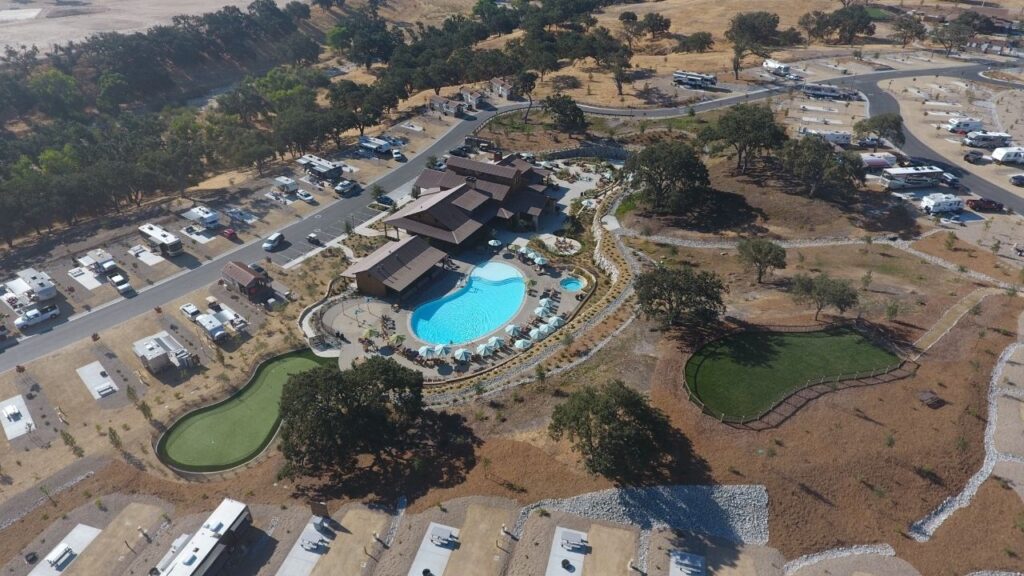
This RV resort is located in Paso Robles Wine Country in Central California. The region has approximately 33,000 vineyard acres planted with wine grapes, and is well known for its heritage varietal Zinfandel, Cabernet Sauvignon, and Rhône-style wines, so as you might imagine, wine tasting is a top activity at the beautifully appointed community center. 

Built for relaxation, Cava Robles is the peak destination for RV camping in California. This luxury resort is nestled in the Paso Robles wine region, near the Pacific coast. Cava Robles boasts numerous amenities, including pools, spas, fire pits, a wellness center, and dog parks. From wine tasting to outdoor movies, there’s an option for all.

It is a large resort that offers a little bit of everything including a gorgeous swimming pool and hot tub area, an outdoor play area for children, walking trails, and two dog parks.

The sites themselves are large with full hook-ups, but they don’t have the extra casitas or outdoor kitchens that you’ll see at some of the other resorts. What you’re paying for here is the location and fabulous climate. 

Learn more: Cava Robles RV Resort 

Tucson Lazy Days RV Resort 

This is actually a KOA, but it is not a franchise location. Instead, it is the company’s flagship resort. We’ve stayed here a few times and it is one of our absolute favorite destinations.

Amenities include two pool areas with hot tubs, a restaurant and bar, mini golf, tennis courts, and community fire pit areas. One of our favorite parts of staying at this RV resort is direct access to The Loop, a system of more than 100 miles of paved bike paths around Tucson and Pima County. 

There are also many different type of sites from standard back-in’s to allow you save money while enjoying the amenities at the resort, to deluxe and premium sites with elaborate outdoor kitchens, private pet yards, and even second floor balconies. 

Learn more: Tucson Lazy Days RV Resort 

Gulf Waters Beachfront Resort

This resort is located on Mustang Island beach in Port Aransas, Texas, which is right on the Gulf Coast. In addition to boardwalk access to the beach, the resort itself is beautifully landscaped palm trees beside and ponds.

Gulf Waters Beachfront RV Resort is located on Mustang Island beach in Port Aransas, Texas, which is right on the Gulf Coast. In addition to boardwalk access to the beach, the resort itself is beautifully landscaped palm trees beside and ponds. Walk to the beach right from your RV!

The resort offers 158 uniquely designed RV sites, many with lush tropical vegetation, pond-view patios, pergolas, fire pits, wet bars, and outdoor kitchens. 

Learn More: Gulf Waters Beach Front RV Resort

Catherine’s Landing RV Resort 

This is a wonderful RV resort for those who enjoy active vacations. It is a large, but quiet area just outside Hot Springs, Arkansas with 400 pastoral acres and surrounded by one mile of water frontage on beautiful Lake Catherine. The premium sites back right up to the water. 

The resort has pontoon boats and kayaks to rent if you’d like to enjoy an outing on the lake. There is also a zip line for the more adventurous guests. If you want to enjoy the free activities, you can take a walk on the  3-mile hike around the property or relax at the large swimming pool, which also includes a splash pad for the younger kids. 

Learn more: Catherine’s Landing RV Resort 

Bluewater Key RV Resort 

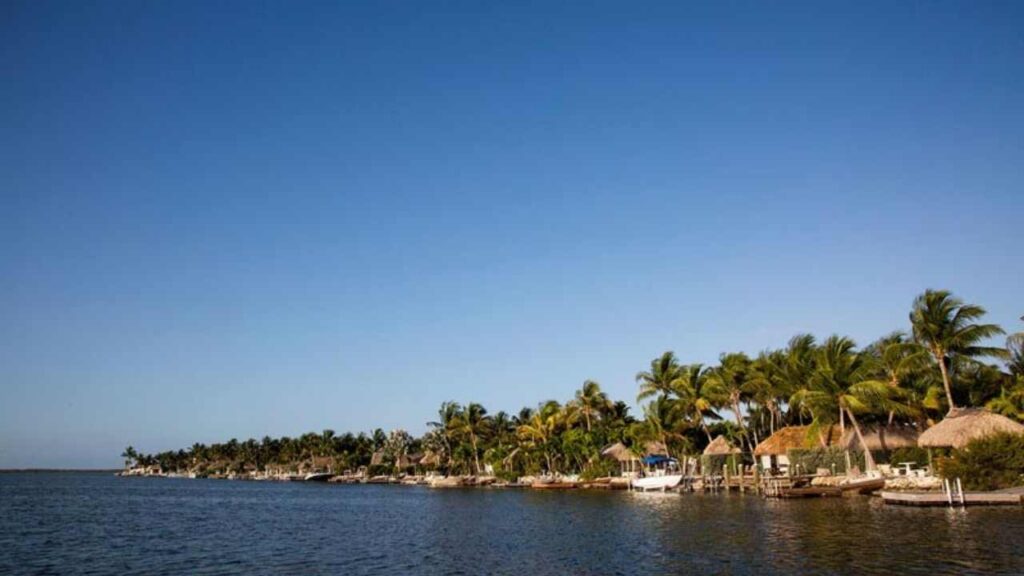
This resort is on our bucket list. While we stayed at the military campground in Key West, our friends were at the Bluewater Key RV Resort. You won’t find a site here for under $100 a night, but you certainly get luxury for your money.  This resort is located on its own peninsula in the Saddlebunch Bay. 

Bluewater Key RV Resort is where luxury meets ideal location. Situated on a peninsula in Saddleback Bay near Key West, Florida this RV resort offers your own tiki huts and private docks.

All sites have their own tiki huts with outdoor seating and many have private docks. If you want to splurge on luxury while enjoying some fabulous weather and the laid back Key West vibe, this is the place to do it. 

Each lot is individually owned so they have their own style and decor. Most have pavers and lush tropical landscaping. The tiki huts often include outdoor kitchens with ceiling fans and televisions. The website is really easy to manage so you can choose the site that is right for you. Rates vary by location within the resort — obviously waterfront is a premium.

The resort also has a heated pool, dog park, and a 200’ community dock. 

Learn more: Bluewater Key RV Resort 

Fort Wilderness Campground and Resort at Disney World

This last one is our annual splurge. Fort Wilderness Campground and Resort is located on the Disney World property in Orlando, Florida. When staying at the “Fort” as it’s affectionately known, you get all the perks of being a resort guest like the extra magic hours at the parks and the ability to make dining reservations and fast pass selections early. Most importantly, the Disney Magic is alive here. I especially enjoy the Chip & Dale Campfire and Sing Along that is held each evening. There are also two pools, one with a water slide and very large splash pad. Finally, you can enjoy the Disney fireworks and the Electric Water Parade each evening from the beach at Fort Wilderness. 

The Fort also offers two restaurants one of which has a take out window if you’d like to enjoy your meal back at the RV. You can rent bikes (although I recommend bringing your own), golf carts, boats, fishing gear, and more. Some people love Fort Wilderness so much they never even go to the Disney theme parks. However, if you do want to enjoy the Magic Kingdom, Epcot Center, Animal Kingdom, or Hollywood Studios, you can take advantage of the free transportation which includes a boat ride to the Magic Kingdom and busses to the other parks and Disney Springs Dining & Entertainment complex. There is even a doggy daycare / boarding facility so you don’t have to leave your puppies cooped up in the RV while you’re out enjoying the parks. 

This is Disney, so it’s not going to be cheap. There are different prices depending on time of year and site type: 

  • Pop-Up / Tent Campsite: Water and power only sites with room for a pop-up camper or a camper van-type vehicle and up to 2 tents. Accommodates equipment on a concrete pad up to 10 feet by 25 feet.
  • Full Hook-Up Campsite: Full hook-up (water/power/sewer) sites  with room for an RV plus a tent with water, power, and sewer. Accommodates equipment on a concrete pad up to 10 feet by 50 feet.
  • Preferred Campsite: Full hook-up (water/power/sewer) sites close to the marina with room for an RV plus a small tent. Accommodates equipment on a concrete pad up to 10 feet by 45 feet.
  • Premium Campsite: These full hook-up (water/power/sewer) sites have room for larger style RVs. Accommodates equipment on a concrete pad up to 18 feet by 60 feet.
  • Premium Meadow Campsite. These full hook-up (water/power/sewer) sites have room for larger style RVs and are close to the Meadow Trading Post, Meadow Recreation Area, Bike Barn and Campfire Area. Accommodates equipment on a concrete pad up to 18 feet by 60 feet.

Learn more: Fort Wilderness Resort and Campground 

Other Luxury RV Resorts 

There are many other wonderful RV resorts that we’ve heard about over the years. Unfortunately for us, many are motorhome only, which is why we didn’t include them in this article. Please share your recommendations in the comments below. 

Sharing is Caring!

Feel free to share this article on social media. Saving it to Pinterest is a good way to have it when you’re ready to book that luxurious stay!

Looking for a luxury RV resort with a private tiki hut or your own dock in Key West? This article shares all you need to know about the best luxury RV resorts in the US.

Filed Under: Campground Reviews

9:01 pm by Julie Chickery

Get Ready for Full-Time RV Travel

In this article I’ll share some of the basics for preparing for full-time RV travel. This information also applies to snowbirds who want to travel south for the winter, or those who are planning an extended RV trip. Specific topics include what to do with your home, where to establish a domicile, how to get your mail, how to plan for healthcare, and how much it costs to RV full-time.

What Do Full-Time RVers Do With Their Homes?

This is a common question for homeowners. I’ll give you some ideas of different options to get help you get started thinking about your plan.

Leave your home vacant. This option applies to those who are either planning to snowbird, and then return home, or those who want to maintain a home base that they can utilize when they return home to visit family. If you choose this option, there are a few things we recommend. The easiest are things like stopping the newspaper delivery and setting the thermostat at an energy saving level. Even more important, is to make sure your home is being looked after–and not just the outside. Most people who are away from home for an extended period think about setting up a lawn service and stopping the mail, but don’t think beyond that. For instance, what if you have a water leak while you’re gone? We all know that things can go wrong, and typically will at the worst possible time. That is why you want someone (that you trust or a professional that is insured) to periodically inspect the interior of your home as a safety precaution.

Rent your home on a temporary basis. This option can also be used if you’d like access to your home for part of the year. What I’m talking about here is an Airbnb or VRBO type of concept. All that means, is that you rent your home, typically furnished, out to tenants on a weekly or monthly basis. We met a couple who owns a home in central Florida in a trendy retirement area called The Villages. Each winter they took their RV down to Key West and rented out their home for four months. The first year they had three different tenants over those four months, so they were very short-term tenants. All the subsequent years, they had one tenant for the full four months. The thing about that is you can usually charge a higher rate than a standard non-furnished rental that’s on a year-to-year lease. They made enough money not only to pay their mortgage, but they were also able to pay for their campground down in the Keys (and those aren’t cheap).

Rent your home on an annual basis. This is the most common route. Selling your belongings or putting them in storage and using a standard rental agreement (or lease) on an annual basis. This was the option we choose when we decided to live and travel full-time in our RV. I wasn’t fully convinced that we would enjoy full-time RVing. So we did a one-year lease and put our stuff in storage. We ended up loving it so much that we later did sold our home and most of our possessions (more on that next). The annual rental was a great option was great for us because it paid the mortgage and allowed us to continue to grow our equity while experimenting with the full-time RV life.

I do often hear concerns from folks about having tenant problems and being so far from the home. We actually had the worst case scenario happen to us: the tenant didn’t pay the rent, had to be evicted, and left damage behind. However, we’re proof that does not have to derail your plans. That is because we had a property manager that took care of everything from collecting rents (when they were paid), managing the legalities of eviction, dealing with the repairs, and finding better tenants. IN fact, the problem with the first tenants is that we found them ourselves through an advertisement and didn’t use a property manger with a vetting process. Finally, all costs were tax deductible. The main thing is that you need to have an emergency fund set aside for the worst case.

Sell your home. If you know that you aren’t planning to return to the area you currently reside in or if you know that you will want a smaller home in the future, you may choose to sell it. If you do sell your home and are lucky enough to make money on it, please do not put that money on an RV. A home is an appreciating asset. That means over time, except in rare circumstances, it will continue to increase in value like an investment. An RV, on there other hand, is not. In fact, every type of RV depreciates significantly. We conducted a comparison of four RVs (motorhome, Class C, fifth wheel, and travel trailer) and found that the depreciation was an average of 33% over the first two years.

In addition, the majority of full-time RVers do not continue to live that way long-term, even when it is originally their intention. Most couples either go back to a traditional home or choose a part-time home base after three years. If you put the proceeds of your home sale into an interest bearing savings account or into a safe investment, you will start your journey with an “exit fund,” which will allow you to enjoy the journey and not feel the stress of being boxed in to any one way of life.

Where Full-Time RVers Establish A Domicile or Legal Residency

No matter it you sell or rent your home, as long as you have moved away from the area (even if it is moving to the open road), you may choose to change your domicile or legal residency in your former state. One of the main reasons full-time RVers do this is to reduce taxes. If you live in a state with income tax or personal property tax for your vehicles, you may want to establish a domicile in a state that does not.

Three states that are very common for full-time RVers to establish a domicile are Florida, Texas, and South Dakota. The reason why these three are so popular is they’re considered RV-friendly. That means that they usually have better deals on registration, no personal property tax, and no state income tax. These states make it very simple to get a driver’s license and to establish residency. There are many other states if you’re retired that don’t tax retirement income. We always recommend that you do some research on your own to determine the legal entanglements you may have with your current state of residency. The last thing you want is to be sued for back taxes because you didn’t properly make the change. Escapees RV Club is geared towards full-time travelers and has a lot of terrific information (as well domicile addresses) in these three states. Membership is only $49.95 a year, and there are a lot of great benefits. Please note that if you are not yet Medicare eligible, health care should be a factor in your domicile decision.

What Do Full-Time RVers Do For Healthcare? 

We cannot emphasis the importance of researching you health care options before embarking on your full-time RV journey enough. Medical expenses are the number one cause of bankruptcy in the United States. Luckily, you do have options, but they will vary by individual situation.

First, if you are working remotely, don’t assume your health insurance will work in all 50 states. Some insurance plans only allow for emergency care when you are outside of your coverage area. That’s an emergency defined by the insurance company and not by you. You need to ask your insurance in advance about portability, that means what is covered outside your network. It may be that you have different plan options, and you could ask which one would work best for a full-time traveler.

If you need to purchase health insurance on the exchange, a lot of people pick Florida for a domicile. Florida has some of the best plans that are completely portable across the U.S. that you can only purchase if you are a resident of Florida.

If you are retired and Medicare eligible, it is more straightforward. However, you will want to check on any supplements you have to make sure they are portable. Finally, if you are retired military, check out our guide to Tricare on the road.

A great place to start your research is the RVer Insurance Exchange. They are an independent insurance broker for all insurance types, and health insurance for full-time RVers is one thing they do. They can quote you a policy for whatever your particular need is as far as health care insurance.

Finally, another health care item is prescription medications. We use a mail-order pharmacy (see next item on how to receive mail). It works well for us as most standard medications (even those requiring refrigeration) can be shipped. If you move too quickly to allow time for your prescriptions to be shipped, you can also typcially use a chain pharmacy like Walgreens, CVS, Walmart, or any national chain pharmacies. However, it is important to be aware of controlled substance laws and regulations. Some medications can’t be refilled at all.

How Do Full-Time RVers Get Mail? 

One of the biggest questions we always get when we’re doing seminars at RV shows is about mail. The best solution will depend on your RV travel scenario.

USPS Mail Forwarding. If you’re going to be away from your home and are going to snowbird down south for several months, you could use the U.S. Postal Service and simply have your mail forwarded. That’s an easy way to do it if you’re going to one location. If you’re going to be on the move, you can change the forwarding address, but it gets trickier.

Mail Forwarding Services. Another benefit of Escapees is their mail forwarding service. With their service, you get an address in Texas regardless of where your domicile is. They hold all your mail until you tell them where you want it shipped. Depending on the service level you want, it costs between $95 and $135 a year plus shipping. Other mail forwarding services are St. Brendan’s Isle in Florida and America’s Mailbox in South Dakota.

Packages. Most campgrounds will allow you to receive mail and packages, but always check first. If they don’t allow it, you may be able to use the local post office for General Delivery. However, not all post offices accept packages that were not sent via USPS. Many cities and towns have something called Amazon Lockers at various retail stores. These have a one time code that you can use to pick up Amazon packages.

How Much Does It Cost To RV Full-Time? 

Another essential part of long-term or full-time RV travel is establishing your budget. It is so important to make sure you can cover all the costs associated with RVing, including emergencies. I’ll cover some of the basics below, but we also have a course Full-Time RV Finance where we go into the weeds on all aspects of full-time RVing-related costs, as well as other financial topics like saving money, making money, and paying off debt.

You can download our free full-time RV budget worksheet to use a guide as you go through the planning process.

Define your travel style. When you’re talking about extended RV travel costs, the first consideration is defining your travel style. This has a considerable impact on costs because just like hotels, you have your low-end motel, and then you have elaborate resorts. Campgrounds can be the same way. You can have your basic campgrounds, you can have dry camping, and you can also have high-end RV resorts. Another thing about travel style is how far you are going to travel. If you’re going south to Florida for the winter and that’s the only drive, and you’re going to stay at one campground, that will have a lower cost than if you’re trying to go from New York to California and back in that same period.

Campground costs. Campground costs can easily be one of the most expensive items on your extended travel budget, but it doesn’t have to be. It all again goes back to that travel style. First, let’s start with the free one. Boondocking is also known as dry camping. Many extended and full-time RV travelers enjoy doing this. It gets you off the grid and out in nature. Here are some examples of free camping in Florida.

The next option, public campgrounds, are between boondocking and the higher-end places. By public campgrounds I mean national parks, state parks, city parks, and county parks. One that we really enjoy are the Army Corps of Engineers campgrounds. Since some form of government run these, they are lower cost because your tax dollars subsidize them. Another thing to know about these campgrounds is that while some have full hookups, many do not.  Full hookups mean you have water power and sewer right at your site. A partial hookup means you don’t have all of that, and it can be different combinations, but usually, the first thing you lose is sewer. However, many publicly owned campgrounds that don’t have sewers do have a dump station on site. These publicly owned campgrounds typically run in the mid-20’s per night. However, there are exceptions like state park campgrounds in southern Florida that are more like mid-40’s per night or concessionaire-run campgrounds at national parks like at the Grand Canyon, which can be in the mid-50’s per night.

Finally, you have privately-owned campgrounds. These also can range in price. There are little “mom and pops” that are no-frills, but with full hookups. They might have some laundry facilities. The higher-end private campgrounds have many amenities like swimming pools, hot tubs, mini-golf, all sorts of planned activities, and some of them even have restaurants. And you know the saying, “you get what you pay for.” That is true of campgrounds. You can see several examples of pricing at campgrounds we’ve stayed at over the years here.  

Fuel costs. Next to campground costs, fuel costs could be your second highest or even your highest expense. RVs (or their tow vehicles if you have a fifth wheel or travel trailer) aren’t known for great gas mileage. It will really depend on how far you want to travel in a given time period. In addition to the distance you travel another variable is if you have another vehicle for your daily driver to go sight seeing. Finally, it is important to note that cost of fuel varies significantly by location. Please read our guide to saving money on fuel costs.

Maintenance. Maintenance is an expensive item that so many people overlook. There is a lot of preventive care, and the more diligent you are about keeping up with it, the less it will cost you in the long run. One of the best things you can do is get out all those books that came with your RV and read them. They will have all of the preventive maintenance items you need to do to each of your RV components. If your RV didn’t come with the books, look at your particular component’s make and model and find that manual online. Learn to perform the basic preventive maintenance items, and that will go a long way. You only need a basic set of tools to do most of this. If you’re not sure how to do it even after looking at the manual, go on YouTube and find a video. We guarantee there’s a video there on how to do the preventive maintenance. The more comfortable you get, you can move into some of the more significant repairs, saving you a ton of money. 

Savings. A critical piece of any budget needs to be savings. Savings is necessary because things happen. That’s just life. Whether you’re full-time or on an extended trip far from your home, you’re going to want to have that little bit of buffer. We call it our emergency fund. We had one month where we had to have a significant repair not covered by insurance or warranty. We also had a two-week period where we had two flat tires, and I broke a tooth (my insurance only covers half of the cost for a crown). We know people who were full-time RVers who had to stop where they were and get second jobs to earn enough money to make a significant repair to their truck.

If you need help creating your full-time RV budget, ideas for making money on the road, tips for saving on RV travel, or a guide to paying off debt to realize your dream lifestyle, please check out our program Full-Time RV Finance.

Filed Under: RV Resources

9:03 pm by Julie Chickery

6 Tips for Safe and Stress-Free Road Trips

Road trips are one of the best ways to explore the world and make memories with friends. Whether you’re planning a cross-country adventure or a weekend getaway, it’s important to plan in advance and be prepared for the journey. With a little bit of preparation, you can ensure stress-free and safe road trips.

Image of an individual in a car looking down a scenic road.

As longtime travelers, we’ve had plenty of time to explore strategies for getting the most out of our RV experience while changing up our lifestyle to meet the challenges of our time. We hope you find them useful as you embark on your own adventures.

Table of Contents
  • Chart a new course
  • Be prepared
  • Understand Your Vehicle’s Restrictions
  • Create an Itinerary
  • Keep All Occupants Safe
  • Secure the Home Front
  • Security at the Campground
  • Be Financially Prepared

Chart a new course

The longer you’re on the road, the more places you’ll see. It’s fun to revisit places you’ve been before, but it’s also fun to get off the beaten track and find hidden gems you might have missed. Check out some of the more isolated campgrounds; they’ll be less crowded, which is better for social distancing. 

Or take things a step further: Have a family member join you in a four-wheel drive. He or she can spend the nights in the RV, then you can go off-roading to even more remote destinations. You can’t get much more socially distanced than that. But it’s a good idea to learn to drive a stick shift first.

Be prepared

Even more than when you’re traveling by car, you need to be sure you have emergency gear on board in case you need it. Of course, you’ll need the standard tool kit, along with jumper cables, a fire extinguisher, antifreeze, and motor oil.

But you’ll also need specialized supplies on the road like an electrical management system, tire pressure monitor, air compressor, sewer valve, hand vac, water purifier, and jack pads. As far as electronic devices go, don’t forget backup cellphone chargers, WiFi and cellphone signal boosters, and a two-way radio. Take a paper map, too, in case you’re out of range of all satellite systems.

And in the current environment, be sure to stock a kit of health and safety items, like hand sanitizer, face masks, rubbing alcohol, and disinfecting wipes. 

Understand Your Vehicle’s Restrictions

Actually, if you’re in an RV, you are going big already, so you need to adjust your driving habits accordingly. If you’re new to this lifestyle, be aware that size matters, whether you’re on the road or in a campground. You’ll need to know where (and whether) your RV is allowed on the road. 

Maximum heights and lengths vary by jurisdiction, so know what’s legal before you cross that state line. Not sure whether you’ve got enough clearance to get under that bridge? Best not to test it. Also, be sure you’re aware of other RV restrictions: Some places, for instance, require that you have special weight-distribution hitches, sway control, or independent braking systems.

Create an Itinerary

Even if — or especially if — you’re always on the road, you need to think and plan ahead to the conditions you could encounter next. Download a weather app so you know what road conditions and potential detours you might be facing soon. If possible, plot out your stops ahead of time, and decide where you’ll be staying. 

RV campgrounds are available across the United States. Follow these tips to find campgrounds along your chosen route, but be sure you know what each has to offer. Rules may vary, too (some, for example, don’t allow you to bring in firewood), so be familiar with them before you stop.

And look for alternatives: For example, Walmart doesn’t offer hookups, but it does allow RV users to use most of its parking lot. (You’ll need permission from the manager first.) Many RVers prefer retail establishments that close at night like Cracker Barrel or Cabela’s to allow for a quieter night’s sleep.

Keep All Occupants Safe

If you’re traveling with children, their safety should always be your top priority. One of the most important things you need to ensure their safety during road trips is proper car seat use. Use the best travel car seat for your child’s age, height, weight, and development. In general, children should use a rear-facing car seat until they’re at least two years old, or until they reach the highest weight or height allowed by the car seat’s manufacturer. After that, they should use a forward-facing car seat with a harness, then a booster seat until they’re big enough to use the vehicle’s seat belt alone. Most importantly, you’ll want to be sure that it is properly installed.

Secure the Home Front

If you’re not a full-time road-tripper, you’ll need to be sure your home base is safe and secure before you get going. Chances are, you’ll be gone for a while, so make sure your house is protected from intruders. Deadbolt locks are always a good idea; so are outdoor sensor lights and indoor lights that turn on automatically at night. 

Not all threats come from the outside, though. It’s also important to protect your home from problems that can arise when you least expect them. If your pipes freeze when you’re gone, or something goes wrong with one of your major appliances, you’ll want to know you’re protected. A home warranty can do the trick by covering the cost of repairs to your essential systems.

Security at the Campground

Typically on a road trip, you’ll be spending hours away from your RV each day. You’ll want to take a few RV security measures. First, a new RV lock should be top of mind when purchasing an RV since most have interchangeable locks. Also, always trust your instincts and leave if a campground doesn’t feel right. Finally, consider installing a system like RV Whisper that monitors power, temperature, propane, and more.

Be Financially Prepared

An RV is a big investment, and the time you take to explore is a major commitment. As with any other major investment, you need to make sure you’re financially prepared — which includes different budgeting and funding factors for RV travel.

You’ll need to increase your fuel budget, for example. Your gas mileage will be significantly less than what you get in a car, so calculate it and adjust your projected costs accordingly. (Gas prices also vary a lot by state, so factor that in, too.) Another thing to consider: Diesel RVs tend to be more fuel-efficient. Look for strategies to save on RV travel. 

Then there’s RV insurance. Many insurers offer a reduced rate for their coverage when the RV is in storage. And you’ll want to have enough money budgeted for a long trip with possible detours, souvenirs, and weather-related mishaps. Beyond that, make sure you have an emergency savings fund as a backup just in case you need it.

There’s a lot to think about when you’re living on the road, but planning and preparation beforehand can make your experience much more enjoyable. Do plenty of research and make a checklist to be sure you don’t forget anything. Then you can hit the road with the knowledge that a great time lies ahead.

Sharing is caring! Share this article on social media or save the image below to Pinterest.

Image of the scenic road leading to Denali National Park

Guest Post by Molly Barnes, a full-time digital nomad, exploring and working remotely in different cities in the US. She and her boyfriend Jacob created the website Digital Nomad Life to share their journey and help others to pursue a nomadic lifestyle.

Filed Under: RV Resources

  • « Previous Page
  • 1
  • …
  • 25
  • 26
  • 27
  • 28
  • 29
  • …
  • 89
  • Next Page »
RV technology gear images include TPMS, EMS, and wifi booster
RV LIFE Trip Wizard
Sidebar Text Ad for Rad Power Bike
RV Rentals from Outdoorsy. Images include van, motorhome, and travel trailer.
Image of RV driving towards mountains.

Signup to receive weekly updates and exclusive free content only available to subscribers!

Privacy Policy

Travel Schedule

Recently
Zion National Park, Utah

Currently
Shenandoah National Park, Virginia

Next Stops
Everglades National Park
Biscayne National Park


Notice

We are a participant in the Amazon Services LLC Associates Program, an affiliate advertising program designed to provide a means for us to earn fees by linking to Amazon.com and affiliated sites.

Free RV camping guide with over 30 pages of tips and worksheets

Download Now

Never see this message again.