Chickery's Travels

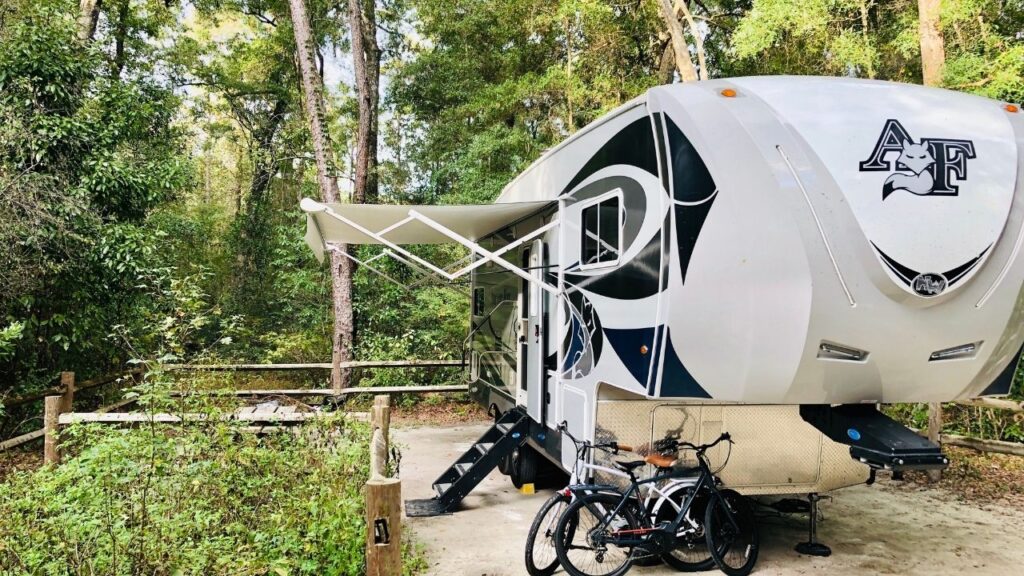
Chickery's Travels logo. A blue-green Earth globe with continents surrounded by dots with an arrow denoting movement or travel and "Chickery's Travels" as part of the dotted circle. Next to this is a photo of their blue and white Arctic Fox 5th Wheel with the awning out.
  • Home
  • Campground Reviews
    • The Best U.S. National Park Campgrounds
    • 28 Must-See State Park Campgrounds You Can’t Miss
    • Alternatives To National Park Campgrounds: Discover Hidden Gems Just Outside the Park Boundaries
    • Best Luxury RV Resorts For All RV Types
    • Best Waterfront Campgrounds For Every Budget
    • Alabama
      • Gunter Hill Campground (Montgomery, Alabama)
    • Arizona
      • Best Campgrounds in Arizona
      • Aspen Campground (Payson, Arizona)
      • LazyDays KOA (Tucson, Arizona)
      • Lost Dutchman State Park (Phoenix, AZ)
    • Arkansas
      • Catherine’s Landing (Hot Springs, Arkansas)
      • Downtown Riverside RV Park (Little Rock, Arkansas)
    • California
      • Best Campgrounds in California
      • Crescent City Redwoods KOA (Crescent City, California)
      • Sea Breeze RV Park (Seal Beach Naval Weapons Station)
    • Delaware
      • Cape Henlopen State Park (Lewes, Delaware)
    • Florida
      • Best Campgrounds in Florida
      • Blue Angel Naval Recreation Area (Pensacola, FL)
      • Jonathan Dickinson State Park (Southeast FL)
      • LazyDays RV Resort (Tampa, FL)
      • MacDill AFB FamCamp (Tampa, FL)
      • Military Camping in Key West
      • Patrick AFB FamCamp (Cocoa Beach, FL)
      • Rainbow Springs State Park & Campground (Ocala, FL)
      • Walt Disney World’s Fort Wilderness (Orlando, FL)
        • Halloween at Disney’s Fort Wilderness
        • Chickery’s Travels Podcast Episode 5: Fort Wilderness Campground Review
    • Maryland
      • Cherry Hill Park (College Park, Maryland)
    • Michigan
      • Port Huron KOA (Kimball, Michigan)
    • Nevada
      • Best Campgrounds in Nevada
      • Las Vegas RV Campgrounds: Nellis Air Force Base and Lake Mead RV Village
      • Boondocking Near Las Vegas
    • New Hampshire
      • Lincoln / Woodstock KOA (New Hampshire)
    • New York
      • Round Pond Recreation Area (West Point, NY)
    • North Carolina
      • Outer Banks West / Currituck Sound KOA (Coinjock, North Carolina)
    • Oklahoma
      • Oklahoma City East KOA (Choctaw, Oklahoma)
    • Texas
      • Best Campgrounds in Texas
      • Alsatian RV Resort (Castroville, Texas)
      • Maverick Ranch (Lajitas, Texas)
      • Texas Wine Country Jellystone (Fredericksburg, Texas)
    • Tennessee
      • Camp Margaritaville (Pigeon Forge, TN)
      • Crossville I-40 KOA (Crossville, TN)
      • Midway RV Park (Memphis, TN)
    • Virginia
      • Complete Guide to Camping at Shenandoah National Park
      • Cape Charles / Chesapeake Bay KOA (Cape Charles, Virginia)
      • Fort Belvoir Travel Camp (Alexandria, VA)
      • Harrisonburg / Shenandoah Valley KOA (Broadway, Virginia)
      • Shenandoah Views Campground (Luray, Virginia)
      • Lynchburg / Blue Ridge Parkway KOA (Monroe, Virginia)
      • Shenandoah River State Park (Bentonville, Virginia)
    • Washington
      • Crescent Bar RV Resort (Quincy, Washington)
    • West Virginia
      • Harper’s Ferry KOA (Harper’s Ferry, West Virginia)
  • USA
    • Alaska
      • 5 Things You Can’t Miss On Your First Trip To Alaska
    • Arizona
      • Apache Trail: A Crazy, Scary, Beautiful Drive
      • Best of Tucson – 10 Unforgettable Activities
      • Complete Guide to Saguaro National Park
      • Lost Dutchman State Park (Phoenix, Arizona)
      • Phoenix Faves: Best Activities to Enjoy on Your Arizona Vacation
    • California
      • Complete Guide to Joshua Tree National Park
      • Complete Guide to Redwood National and State Parks
    • District of Columbia
      • Budget Friendly Fun in Washington D.C.
      • Favorite Hikes near Washington DC
      • Indoor Skydiving and TopGolf: Just Another Day of Family Fun!
    • Florida
      • Florida National Parks Road Trip Guide
      • Best Beaches in Florida’s Panhandle
      • Best Walt Disney World Festivals For Adults
      • Blowing Rocks Preserve – Jupiter Island, Florida
      • Bok Tower Gardens
      • Daytona Beach – The World’s Most Famous Beach
      • Enjoy the Best of Sunny Sarasota
      • Epcot International Food & Wine Festival
      • Gasparilla – Tampa’s Pirate Invasion
      • 3 Days on the Nature Coast 
      • Get Back to Nature in Tampa Bay
      • Florida Freshwater Springs on the Nature Coast
      • Halloween at Disney’s Fort Wilderness
      • Kennedy Space Center – Cape Canaveral
      • Island Hopping at Honeymoon Island and Caladesi Island State Parks
      • Must See Sights in St. Augustine, FL – America’s Oldest City
      • Rainbow Springs State Park & Campground (Dunnellon, Florida)
      • Take Me Out to the Ball Game – Spring Training in Tampa, FL
      • Tarpon Springs – The Gulf Coast Town with Greek Flavor
      • The 5 Best Beaches in the Tampa Bay Area
      • Top 5 Things to Do on Florida’s Space Coast
      • What Not to Do When Kayaking on the Weeki Wachee River
      • Why We Love Tampa
      • Wizarding World of Harry Potter – Universal Studios and Islands of Adventure
    • Georgia
      • Visiting Atlanta? Don’t Miss These Civil Rights Museums
    • Hawaii
      • Everything You Need to Know About Camping in a Jeep Wrangler in Hawaii
    • Illinois
      • One Day In The Windy City – Chicago Itinerary
    • Maine
      • Coastal Maine Road Trip
      • Discover the Beauty of Monhegan Island, Maine
      • Acadia National Park: Highlights You Can’t Miss
    • Nevada
      • Explore Las Vegas – It’s More Than Just Gambling
    • New Hampshire
      • Experience the Magic of New Hampshire’s White Mountains
    • North Carolina
      • Complete Guide to Great Smoky Mountains National Park
      • Uncover the Coastal Charm of North Carolina’s Outer Banks | A Guide for Visitors
    • Oregon
      • Navigating Oregon’s Natural Gems
    • Pennsylvania
      • The Best Things To Do In Lancaster Pennsylvania
    • Tennessee
      • Complete Guide to Great Smoky Mountains National Park
      • Burgess Falls: 3 For 1 Waterfall Special
      • National Civil Rights Museum – Memphis, TN
      • Window Cliffs, TN – I’m Not Afraid of Heights, But I am Afraid of Falling!
      • WWII History in Tennessee
    • Texas
      • Best Restaurants in Fredericksburg
      • Enjoy a Bird’s Eye View of Texas Hill Country
      • Explore Nature’s Untamed Beauty at Big Bend National Park
      • Top 10 Activities in the Dallas – Fort Worth
    • Utah
      • Discover the Best of Zion National Park
    • Virginia
      • Explore Great Falls Park, Virginia
  • RV Resources
    • 3 Simple Steps to Find the Best RV Campgrounds
    • 5 Years Full-Time RV: Lessons Learned & Biggest Regret
    • Boondocking – What We Learned From Our First Dry Camping Experience
    • Tips for Boondocking Success
    • Essential RV Gear
      • Essential RV Gear Guide
      • DIY RV Power & Solar Upgrade
      • RV Must Have: Tire Pressure Monitoring System
      • RV SnapPads Product Review
      • RVLOCK Keyless Entry Door Handle Installation and Review
      • Shop “RV Local” With TechnoRV
      • Top RV Gadgets & Accessories
      • WeBoost Cellular Booster Review
    • Maintenance
      • DIY RV Power & Solar Upgrade
      • DIY Power Upgrade – “Solar Ready” Arctic Fox Fifth Wheel
      • An Easy Way to Protect Your RV Water Heater
      • Easy DIY Project to Protect Your RV Water System
      • How to Reduce the Likelihood of Tire Blowouts on your RV
      • Odor Free RV Black Tank Tips
      • RV Condensation: What It Is, What It Does, and How To Stop It
      • RV Roofs – What You Need to Know
    • Living in an RV
      • 9 Lessons From 2 1/2 Years on the Road
      • Dealing with my Biggest Full-Time Travel Struggle, Missing Family While Traveling
      • Downsizing: 3 Areas That Make The Biggest Impact
      • Full-Time RV: 2019 Year in Review
      • Full-Time RV: 2018 Year in Review
      • Full-Time RV Travel – 2017 Year In Review
      • How Full-Time RVers Celebrate the Holidays
      • Get Ready for Full-Time RV Travel
      • Internet Solutions for RV Travelers
      • The Ultimate Guide to Embracing the Full-Time RV Lifestyle
      • Living in a Tiny, Traveling Home
      • Making Friends (and reconnecting with old friends) While Traveling Full-Time
      • Pros & Cons of Full-Time RV Travel
      • RV Organization & Storage Ideas
      • Short-Term RV Storage: Leaving The RV Behind
      • Top 3 Lessons Learned & Biggest Regret: 3 Years Full-Time RV Living
      • What We Wish We Knew Before Full-Time RVing – Stories from the Road
      • What You Need To Know Before Selling Everything And Moving To An RV
      • Why We Are Traveling Full-Time In Our RV
    • Must Read Books Before Becoming A Full-time RVer
    • RV Organization & Storage Ideas
    • RV Remodel
      • Planning an RV Remodel
      • RV Kitchen Cooking Videos
      • Painting Your RV Interior
      • Update the RV Kitchen – Backsplashes & More
      • Updating Your RV Window Treatments
      • RV Bedroom Makeover
      • RV Remodel Costs with Before & After Photos
      • Vintage Camper Renovation
    • RV Holiday Tour – Decorating Our Small Space
    • RV Hurricane Evacuation
    • RV Misery Can Be Overcome By The Generosity Of Others
    • How Book Readers Can Space and Weight in the RV
    • Slow Travel
    • Small Kitchen Cooking
      • Eating Healthy on Travel Days
    • Staying Healthy
      • Traveling with Fibromyalgia, Arthritis, and Other Chronic Pain Conditions
    • Trip Planning
    • Traveling with Pets
      • RVing with Your Cat
      • Traveling with Restricted Breed Dogs
    • Why I Prefer RV Travel Over Flying
    • Your Guide To Planning The Best Family Vacation This Summer
  • Travel Finance
    • 5 Tips to Save on RV Travel
    • 5 Ways to Fund Full-Time Travel
    • Creative Ways To Save Money On Your Next Vacation
    • Full-Time RV Expenses
      • Annual Full-Time RV Expenses – The Big Three
    • Five Credit Card Strategies To Improve Travel
    • How Much Do Campgrounds Cost?
    • How Much Does it Cost to RV Full-Time?
    • How to Camp for Free
    • How to Earn Passive Income from Your RV (Without Doing Any Work)
    • How to Save Money on RV Fuel Costs
    • How to Save on Food While Camping
    • How to Start a Profitable Blog
    • How We Earn A Living While Traveling Full-Time (And How You Can Too)
    • How We Paid $139,000 of Debt in 2 Years While Full-Time RVing
    • Learn How to Finance Your Dreams
    • The Top 7 Ways to Save Money While Traveling Full-Time
    • RV Purchasing
      • RV Purchasing: Understanding RV Types
      • Benefits of Renting an RV: Try Before You Buy
      • Should I Buy A New or Used RV?
      • The Costs of RV Ownership
      • The True Cost of Financing an RV
      • Attend An RV Show – Even If You Already Own An RV | Exciting Reasons Why
    • Save Money Using the Public Library (On More Than Just Books)
  • Military Travel
    • Guide To Using Military Campgrounds
    • Health Care for Retired Military Full-Time RVers
    • Why Military Retirees Should Fly Space-A
  • About Us
    • RV Shows We’re Attending
    • Contact Us
    • Follow Us

7:04 pm by Julie Chickery

How Much Do Campgrounds Cost?

One question we get asked quite often is, “How much do campgrounds cost?” This answer depends on several different factors. In this article, we’ll discuss the main considerations of campground pricing and provide several different examples of campground fees. We’ll break up the costs by pubic campgrounds and private campgrounds with the least we’ve paid to the highest.

Enjoy the video or read the article below to learn how much campgrounds cost.

Campground Terminology

First, let’s make sure we’re all on the same page for terminology. 

Hook-Ups: Full, Partial or None

Full Hook-Ups

Full hook-ups campsites have water, power and sewer connections right at your site. Typically the electricity at full hook-up sites includes two options: 50 amp or 30 amp. The great thing about full hook-up campsites is that you can enjoy all the features of your RV without having to worry about managing your batteries or water holding tanks. I like to call our fifth wheel a rolling condo and full hook-up sites are really what allow it to be a home away from home.

Note: Most campgrounds that offer full hook-up sites will also have other amenities such as cabe, wifi, swimming pools, and even scheduled activities. However, these are not always included in the nightly fee. Be sure to check for additional costs before booking your stay.

Partial Hook-Ups

This is exactly what it sounds like, partial, meaning you will be giving up something and it typically sewer. Most partial hook-up campsites offer only water and electricity. Also the electricity may only be 30 amp. Be sure to read the campsite description to know what you are getting. We have stayed at a campground that only had 30 amp electricity, no water or sewer. Many campgrounds that don’t offer water or sewer at your site will have a bath house and dump station that are free for campground guests to use, but don’t assume they will be there. Always check first.

We find partial hook-up campsites most often in publicly owned campgrounds like national or state parks. In our experience most of the publicly owned campgrounds are partial hook-ups. When we come across one with full hook-ups we enjoy it as a rare find.

No Hook-Ups

These are also referred to as primitive or dry camping sites and they have no hook-ups at all. I’m not talking about boondocking here because to me boondocking implies no campground at all. Many National Forest campgrounds offer dry camping sites.

Graphic will text for Roadtrippers Plus

Public Campgrounds

This category of campgrounds includes national parks, national forests, Corps of Engineers, state parks, and even city or county parks. Below I’ve picked a range of some of our favorites beginning with the least expensive to the most expensive ranging from $18.00 to $33.00 per night.

O’Leno State Park – North Central Florida
O'Leno State Park in northern central Florida

The 2020 rate is $18.00 per night for spacious sites with partial hook-ups (water, electricity). The campground is located along the banks of the scenic Santa Fe River, a tributary of the Suwannee River, and features sinkholes, hardwood hammocks, and river swamps. It is not near the beach or any tourist attractions, which is why it is one of the lower-priced campgrounds in the Florida State Park system.

Gunter Hill Corps of Engineer Campground – Montgomery, Alabama

Corps of Engineers (COE) campgrounds are owned by the federal government. You can find them on Recreation.gov, just as you can find national parks and national forest campgrounds. The COE parks are found on bodies of water like lakes, reservoirs, and rivers.

Gunter Hill Campground is situated on Catoma Creek, a tributary of the Alabama River. It has 142 sites, with 75 of them boasting full hook-ups. The regular nightly rate in 2020 was $26.00 for the full hook-up sites.

Jonathan Dickinson State Park –  Southeastern Florida

This is the largest state park in southeastern Florida and has two campgrounds. One is partial hook-ups with much smaller sites, and the other has large full hook-up sites. The 2020 rate for the full hook-up side was $26.00 per night. Jonathan Dickson State Park is about a 10-drive from the Atlantic coast beaches, but it has the tranquil Loxahatchie River running through it. We also enjoyed the history on site: including a secret World War II training camp, the story of the shipwrecked Quaker merchant who is the park’s namesake, and Trapper Nelson, the legendary Wild Man of the Loxahatchee.

Assateague National Seashore – Maryland Coast

There are two campgrounds on Assateague Island: Assateague National Seashore (run by the national park service) and Assateague State Park. The national park campground does not have any hook-ups and is $30.00 per night. The state park only has electricity in one loop. The rest of the sites have no hook-ups and cost $28.00 per night. You might wonder why they are so expensive for no hook-ups. The answer is location, location, location, and wild ponies.

We did learn one very hard lesson. I normally check the cancellation policy very closely. Most state and national parks have very generous policies where you get all your money back except the reservation fee, which is typically around $10. Unfortunately, we learned the hard way that Maryland State Parks don’t have such a lenient policy. We had to cancel our stay two days before our trip and ended up losing the entire pre-paid 5-night stay. For that reason, when we plan a return trip, it will be to the national seashore campground.

Cape Henlopen State Park – Delaware Coast

This was my favorite campground of 2020. The regular rate was $33.00 per night for water and electricity. They also have a few pull-thru sites that are $40.00 a night. This state park has miles of bike trails and is surrounded by water on 3 sides (Atlantic Ocean and Delaware Bay). It was a World War II coastal defense site, and we were able to take a tour of a historic battery and learn more about Fort Miles and the role it played during the war.

Private Campgrounds

This category of campgrounds includes small mom & pop businesses as well as large franchises and even Disney. Below you’ll see a range of some of our favorites beginning with the least expensive to the most expensive ranging from FREE to $129.00 per night.

Chiriaco Summit Campground – California Desert

This campground has a handful of fairly level sand sites with fire pits (and that’s it). There are no hook-ups, no dump station, no water fill station, no trash can, no laundry, or anything else. But the price is right. You can stay for FREE for up to seven nights. The location is fabulous too. It is right behind the General Patton Museum and one exit from the south entrance of Joshua Tree.

Wagon Circle Campground – Heber Springs, Arkansas

Wagon Circle Campground in Heber Springs, Arkansas

This was a wonderful example of a locally owned small campground. The owner was very friendly and lived on-site. The land was previously a farm, and he said when he acquired it, he had no interest in farming so he created a campground. For $30.00 a night we got full hook-ups and terrific wifi. The campground also had a small playground, laundry room, and fishing dock on the beautiful Little Red River.

Tucson Lazy Days KOA – Tucson, Arizona

This was a fabulous destination RV resort for us. We stayed here for over three months on two different occasions in 2019. The 2020 winter rate for the basic back-in sites with a patio and full hook-ups is $42.95 per night. The Tucson Lazy Days KOA have many other site types with different prices, some are pull-thru and some even have their own private fenced-in doggy yard. Regardless of your site type, you get free wifi and cable, as well as access to a fitness room, bar & restaurant, and two swimming pools with hot tubs.

Redwoods KOA – Crescent City, California

This wonderful KOA is located within minutes of the Redwoods National Forest. The Crescent City Redwoods KOA actually has redwoods of its own right on the property with nature trails winding through them. The rate for a full hook-up pull-thru site is $55.50 per night. The campground had free wifi, cable, and a game room.

Fort Wilderness at Walt Disney World – Orlando Florida

As you can imagine, this is a pricey campground. Nothing at Disney is inexpensive. The 2020 rate for a Preferred Site (full hook-ups near the marina) in November is $129.00 per night. If you are gasping for air right now, we were too when we first saw the price.

However, we decided to stay a couple of years ago and fell in love with it. In our opinion, there’s no better way to spend your vacation at the “happiest place on earth” than to camp in Walt Disney World’s Fort Wilderness Resort and Campground! It is located on Disney property and is considered an official WDW resort. That means you get all the perks like extra magic hours, fast pass access 60 days before your trip, and all the resort discounts.   You’ll also be able to ride a boat from the campground directly to WDW’s ticket and transportation center — no driving during your Disney vacation!

Saving Money on Campground Stays

 We love to stay at the different types of campgrounds. Sometimes we want to be surrounded by nature and sometimes we want the bells & whistles. Over the many years of our RV travels, we’ve learned a lot of tricks to saving money on campgrounds. One of them is just to plan ahead. The farther out you book, the more likely you are to find a deal or secure one of the less expensive sites in a larger campground.

If you’d like to see more of our tips and tricks for saving money on RV travel, check out our book Full-Time RV Finance.

Filed Under: Travel Finance

9:54 pm by Julie Chickery

Can You Travel Sustainably by RV?

As travel by RV grows in popularity, especially in the face of a global pandemic where keeping your distance from others is advisable, the question is often posed as to exactly how environmentally conscious it is to travel the country via this mode.

As travel by RV grows in popularity, especially in the face of a global pandemic where keeping your distance from others is advisable, the question is often posed as to exactly how environmentally conscious it is to travel the country via this mode.

A staple in many of our holiday plans, packing up the kids and some essentials, and loading everyone into the RV and seeing what happens is always going to be an appealing prospect. No fighting your way through the airport with tired kids. No need to find a suitable rest stop for bathroom breaks and no packing and unpacking as you move from destination to destination. An RV is a home away from home and a perfect way to see the world depending on where you are traveling.

Being able to maintain your eco-credentials when RVing within the US or abroad isn’t impossible. At first glance, RV travel may not appear to be sustainable; however, there are ways you can look to offset your carbon footprint when traveling via this mode.

Split Your Travels

Especially when traveling abroad, why not consider splitting your vacation time between a fixed base and RV travel around the country. We recently interviewed our friend Michelle of BenandMichelle.com about RV travel in Australia. See the video below.

You can rent vacation homes anywhere in the world to enjoy a more authentic visit–just look at these houses for rent in Kota Kinabalu. This method of travel can help you to reduce your carbon footprint and explore the area like a local. Spending money that is put back into the local economy, walking as much as possible and using local businesses are all legitimate ways you can reduce your carbon footprint and put back into the economy at a grassroots level.

Avoid Disposable Items

Another great thing about traveling by RV is that you can take all your own gear with you. Just having your own dinnerware and cutlery will save you money and save the environment by reducing the need to buy disposable items. Try to opt for more eco-friendly and sustainable items to reuse throughout your journey and avoid buying products you will need to replace. 

When purchasing an RV consider the appliances that will make your life easier on long or frequent RV trips. For instance, a super compact portable washing machine can help you to save water and on costs of doing your laundry as you won’t need to visit laundromats on your travels.

Of course we always try to use cleaning supplies that are kinder to the environment to reduce the damage done from chemicals entering the ground or local water systems. Biodegradeable and plant-based cleaners are always better when boondocking as you don’t want to release harmful chemicals with your gray water. We always try to be aware that our actions have a direct impact on the world around us and remember to help preserve the land we are visiting.

RV Power Sources

One step further to reduce your carbon footprint is to convert your RV to more sustainable energy sources when parked and employ other tips for reducing emissions and saving on fuel efficiency when driving.

Our power upgrade included swapping our lead-acid house batteries to lithium and installing solar panels. When stationary, we consider it to be the epitome of sustainability.

When on the road, there is no denying that at around 8 miles per gallon RV’s are less than friendly to the environment. And with more than 1 in 12 households in the US owning an RV, that is a lot of RV’s on the road. So one thing we do is to play our part is reduce the total miles by taking longer duration trips so we can stay in one place longer, or take shorter trips closer to home.

Another tip for improving fuel efficiency and overall performance is preventative maintenance Before heading out on a long journey, make sure you have given your RV a fine-tuning. Making sure your lights are working correctly, tires are properly inflated – this can save you up to 20% on fuel efficiency, and your engine is working as it should do along with all the other components will help you to save on fuel bills and lessen the impact your RV will have on the environment.

Finally, pay close attention to how you drive too. Slow your acceleration and take your time as you drive keeping to speed limits to reduce emissions and maximize your fuel consumption. Avoid sudden braking and reduce your speed gradually.

A Final Note

As you can see traveling sustainably by RV isn’t impossible. It can take some effort and planning to change how you are used to traveling, but it is worth the rewards. Obviously any type of travel leaves a carbon footprint, but we see RV travel when done right, as a better alternative to flying. Just employing the subtle changes we mentioned her will help towards reducing your impact on the world around you.

Filed Under: RV Resources

8:30 am by Julie Chickery

Prepare to Travel Full-Time in an RV

So you’ve decided to take the leap into full-time RV living, and now you’re wondering what you need to do to get there. There are many reasons to live and travel full-time in a recreational vehicle from saving money to a desire to see more of our beautiful country. In this article, I’ll cover a few key steps you can follow to prepare yourself and your RV in a stress-free way!

The RV Purchase

Before you start looking at RVs, first consider your RV life. How you plan to live and travel in your RV should have a huge impact on what type of RV you choose. Consider these questions for a start: 

  • How quickly do you plan to travel? Breaking down and moving often can be more cumbersome with some RVs than others. 
  • Which room in your home is most important to you? If you enjoy cooking, you may want an RV with a large kitchen. If you work remotely, you will need to consider a comfortable workspace. 
  • What type of activities do you enjoy? Will you want room for indoor activities or space outside the RV to carry bikes and kayaks? 
  • Do you plan to stay mostly at privately owned campgrounds or would you like to frequent national parks? Most national park campgrounds have smaller sites and restrict larger RVs. 
  • Would you like to dry camp or boondock often? If so, you’ll need to consider your power sources, water tanks, and 

Here’s a video we created discussing some tips on choosing the right RV for you. 

Download our free RV shopping tips here. 

If you are in doubt about what type of RV to purchase, we recommend renting first. Peer-to-peer RV rental services have all makes and models of RVs. You can even rent a fifth wheel or travel trailer and have it delivered to a nearby campground if you don’t have a truck yet. 

One great way to save money and yourself from a very costly mistake is to purchase used ones. Read this article to answer the question should I buy new or used? 

RV Gear

Once you have your RV, there will still be work to get it ready for your full-time RV travels. This will include purchasing the essentials and completing any required modifications. This ranges from electrical and water systems to safety gear and comfort items.

Electrical Systems

There are a few key items you may need for your RV’s electrical systems. 

The first and most important is a Surge Guard electrical management system. This is much more than a surge protector. It provides total electrical protection for your RV. Any surge or even low voltage issue can wreak havoc with your RV’s sensitive electrical components, so don’t try to cut costs by skipping this item. 

If you are at a campsite with power, you’ll need a power cord. While your RV likely came with one, you’ll want to check and see how long it is and where it plugs into your RV. The last thing you want to do is arrive at a campsite after a long day of driving and realize the power post at the rear of the site is too far for your cord. If you have a 50 amp RV, you may also want to purchase a 50 to 30 amp adapter known as a dog bone. This will allow you to connect to the 30-amp power pedestals often found at state and national parks. 

Another essential piece of equipment you’ll need if you want to do any off-grid camping is a generator. For RV’s, the type you specifically need is called an inverted generator. Not only are they quiet and compact, but they provide a more stable stream of power. With a generator, you can power your entire RV, from wall outlets to convection ovens and lights no matter where you are camping.

Water & Waste Systems

You’re going to need a few items to manage your RV water and waste systems. First, you’ll want a long potable water hose to connect to a water source at your site or at a potable water fill station. In between the water spigot and the hose, you’ll also need to add a water pressure regulator and a water filtration system. 

You’ll also need a sewer hose to empty the black & gray water waste tanks either at your full hook-up site or a dump station. We’ve used the RhinoFlex hose for years. We are glad we got the 20′ because not every campsite and dump station is created equal. Some are placed quite far from where you’d expect. The clear elbow and 4-in-1 dump station fitting will make life much simpler too.

Tire Pressure Monitoring System

The most important piece of safety equipment you can buy is a tire pressure monitoring system or TPMS. It consists of a series of sensors systems that screw onto each tire’s valve stem to monitor tire air pressure and temperature. We have the sensors installed on the Fifth Wheel and truck tires. The TPMS alerts the driver if a tire gets too hot or has pressure outside the desired range (too high or too low). This gives you time to pull over safely before a blowout occurs. We personally recommend the TST 507. 

Those are the basics, but see our list of essential items that every RVer needs for more recommendations. 

RV Modifications & Renovations

No RV is perfect. You will likely want to make some changes to make it feel like home. Our two major projects were a solar and lithium power upgrade and interior decor renovations. 

Watch our four-part series on our RV solar and lithium power upgrade:

See the costs associated with our RV remodel:

Take some time to think about how you plan to use your RV, then prioritize what projects you’ll want to undertake to make it your own. 

RV Familiarization

Now you have your new RV home, you’ll want to get to know it well. If you are an experienced RV traveler, or you’ve had your RV for quite some time, this should be a fairly easy step. But if the RV is new to you, give yourself some time before you move into it full-time. 

One thing to be aware of: an RV comes with stacks of user manuals, not just one. The reason for this is that your RV manufacturer makes the body of the RV, but all the components like the air conditioner, furnace, oven, microwave, stairs, leveling jacks, etc. are made by other manufacturers. You’ll want to test all of these components and make sure they are working well before you move into your RV. It is much easier to leave your RV at the shop for warranty work if you have another place to stay.

You’ll also want to get some practice driving and parking before you set out for a cross-country adventure. A great place to start is with an RV Driving School. Simply go to their website and find an instructor near you for a personalized training for parking and driving all types of RVs. 

Downsizing

To state the obvious, an RV is considerably smaller than your average house. With a smaller space, it’s important to reduce the number of “things” lying around which can cause clutter. 

Secondly, you can start to reduce the size of your closet. You may love clothes, but do you really need them all? 

Lastly, the other extras such as books, cooking utensils, and extra bedding or towels. All of these extras can be sold in person, online, or even donated to charity shops. 

A good rule of thumb is if you haven’t worn it or used it in the last month, you probably don’t need it. 

The hardest items to part with for many are those with sentimental value. Check out my article on tips for overcoming common hurdles with downsizing.

The Take-Away

Now we have covered the major steps to prepare for full-time RV living: RV purchase, RV gear, RV modifications, and downsizing.

The steps can seem fairly basic, however, it’s easy to forget some of the most important things to check when you have so much to think about. 

While it can feel like a huge change you should now hopefully feel more confident to tackle, and even enjoy, preparing for your new lifestyle! 

Filed Under: Living in an RV, RV Resources

  • « Previous Page
  • 1
  • …
  • 24
  • 25
  • 26
  • 27
  • 28
  • …
  • 83
  • Next Page »
RV technology gear images include TPMS, EMS, and wifi booster
RV LIFE Trip Wizard
Sidebar Text Ad for Rad Power Bike
RV Rentals from Outdoorsy. Images include van, motorhome, and travel trailer.
Image of RV driving towards mountains.

Signup to receive weekly updates and exclusive free content only available to subscribers!

Privacy Policy

Travel Schedule

Recently
Zion National Park, Utah

Currently
Shenandoah National Park, Virginia

Next Stops
Everglades National Park
Biscayne National Park


Notice

We are a participant in the Amazon Services LLC Associates Program, an affiliate advertising program designed to provide a means for us to earn fees by linking to Amazon.com and affiliated sites.

Free RV camping guide with over 30 pages of tips and worksheets

Download Now

Never see this message again.